Forty Dollars and a Spine: How a Criterion Box Set Tricked You Into Loving a Movie You Hated
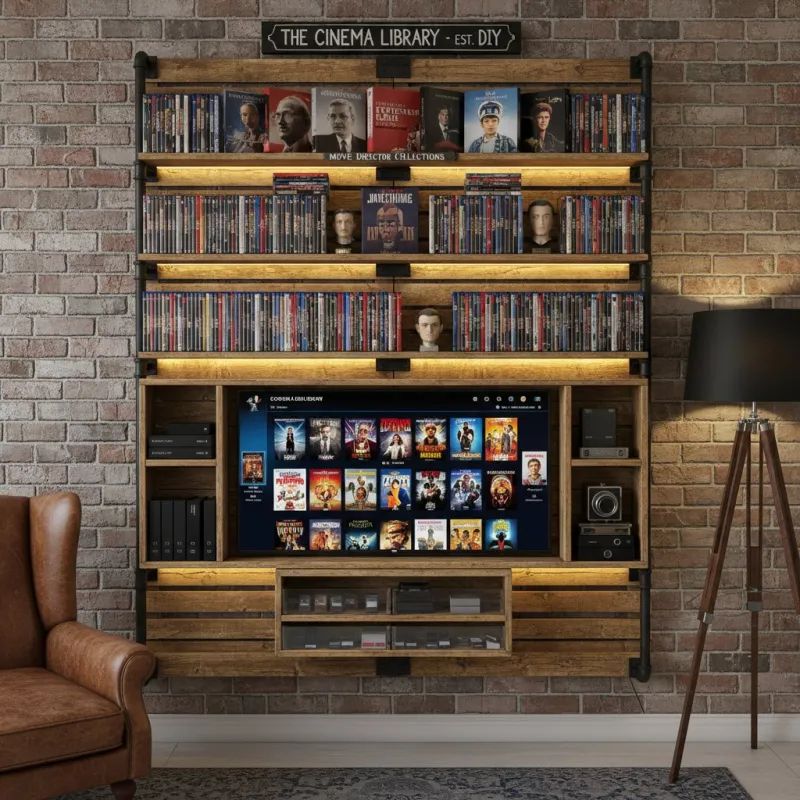
Photo: film collection books on shelf artsy cinema, via obrazki.ai
Let's establish something uncomfortable right at the top: you did not enjoy Jeanne Dielman, 23 quai du Commerce, 1080 Bruxelles the first time you watched it. You watched it on a laptop at 11 p.m. on a Tuesday, you fell asleep twice, and when it ended you sat in silence for a full minute before opening DoorDash. That is the truth. That is what happened.
And then — then — you bought the Criterion Collection edition. And now it's formative cinema. Now it "changed the way you think about domestic space." Now you recommend it to people at parties and watch their eyes go glassy.
Welcome to the Criterion Effect. Pull up a chair. We've been expecting you.
The Box Is Doing a Lot of Heavy Lifting
Here is what Criterion understands that you apparently don't: a beautiful object makes you feel like a beautiful person. The matte cardboard spine. The custom artwork that looks like it was designed by someone who has never compromised on anything in their life. The booklet — oh, the booklet — filled with essays by film scholars who use words like "haptic" and "phenomenological" without a trace of irony.
You put that thing on your shelf and it radiates. It doesn't just sit there. It judges the DVDs around it. Your copy of The Fast and the Furious physically shrinks in its presence.
The psychology here isn't complicated, but it is embarrassing. Researchers call it the "endowment effect" — once you own something, your brain assigns it more value than it objectively has. Criterion just weaponized this against your entire cinematic memory. You paid $39.95 (on sale — you're not made of money) and your brain quietly filed the purchase under "things I must now retroactively appreciate."
The movie didn't change. You changed. Specifically, your wallet changed, and your brain followed.
The Booklet Is the Real Product
Let's be honest about the supplementary materials, because this is where Criterion really earns its money. You watched the film. Fine. But did you read the 48-page essay by a Columbia professor explaining why the 14-minute shot of a woman peeling potatoes is actually a radical deconstruction of capitalist labor? Because once you've read that, the potato scene hits different.
This is the genius of the Criterion model. They don't just sell you a movie. They sell you the intellectual framework to retroactively enjoy the movie. The film itself is almost incidental. What you're really purchasing is a permission slip — a laminated, beautifully typeset permission slip — to tell people this film meant something to you.
Before the box set: "It was slow." After the box set: "It interrogates the passage of time in a way that most cinema is too cowardly to attempt."
Same movie. Forty dollars. Completely different person.
The Shelf as Autobiography
There's another layer to this, and it's slightly more painful to acknowledge. Your Criterion shelf isn't a movie collection. It's a self-portrait. Every spine is a statement about who you are or, more accurately, who you want people to think you are when they come over and scan your bookcase.
Breathless. Tokyo Story. The 400 Blows. Each one is doing PR work for you while you sleep.
The thing is, this isn't entirely cynical. Humans have always used objects to construct identity. Your great-grandmother had her good china. Your dad had his record collection. You have a $200 stack of films you've watched between one and three times, arranged by spine color for maximum visual impact.
The difference is that your great-grandmother actually used the good china on occasion. You have watched Chungking Express once, found it deeply confusing, and have since described it as "one of the most alive films ever made" to at least four separate people.
The Rewatch That Never Happens
Here's the part of the Criterion lifecycle that nobody talks about: the rewatch. Or rather, the absence of one.
Buying the box set always comes with a very sincere intention to revisit the film properly. With context now. With the director's commentary. Maybe even with a notepad, like some kind of functioning cinephile adult.
This does not happen. The box set goes on the shelf, the shelf does its identity work, and the film itself enters a state of dignified semi-retirement. You own it. That's the relationship. Ownership is the point.
Every few months you'll pick it up, read the back, feel a warm surge of cultural self-satisfaction, and put it back. This is the full experience. This is what you paid for.
Is Any of This Actually Bad?
Here's where Cinephobe reluctantly admits something: maybe not entirely.
If a beautiful box set gets someone curious enough to watch Akira Kurosawa or Agnes Varda or Yasujiro Ozu — even once, even sleepily, even while also scrolling through their phone — that's probably a net positive for the world. The gateway drug argument has some merit. The shelf that started as performance occasionally produces genuine curiosity.
And look, the films themselves are real. They're good. Some of them are genuinely great. The Criterion Collection didn't manufacture the quality of Seven Samurai. It just packaged it in a way that made you feel like acquiring it was an act of personal growth.
Which, in its own roundabout, forty-dollar way, maybe it was.
Just don't tell us you loved Jeanne Dielman the first time. We were there. We saw your face.