Congratulations, Nothing Happened for 97 Minutes: The Secret Formula Behind Every 'Important' Indie Film
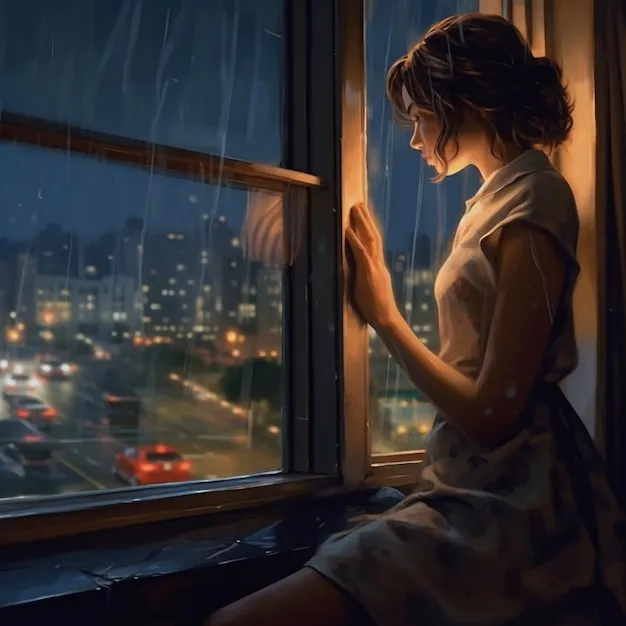
Photo: woman staring out window dramatic moody indie film aesthetic, via img.freepik.com
Somewhere in a coffee shop in Austin, a 26-year-old is finishing a screenplay. It has no three-act structure. The protagonist doesn't want anything, achieve anything, or really do much of anything. There is a scene where she peels an orange for four minutes while ambient sound design hums in the background. The working title is The Weight of Ordinary Silences. It will premiere at Sundance. It will receive a 94% on Rotten Tomatoes. A critic from the A.V. Club will call it "a devastating excavation of the female interior."
None of this is hypothetical. It is Tuesday.
Welcome to the Prestige Industrial Complex — the self-sustaining ecosystem of elevated indie filmmaking where the less that happens on screen, the more awards-adjacent the whole thing becomes. We at Cinephobe have watched enough of these films to recognize the machinery underneath, and we're here to blow the lid off a formula that has somehow become more predictable than the MCU origin story playbook.
Step One: Pick a Quiet, Misunderstood Woman (Or Quiet, Misunderstood Man, But Probably Woman)
Your protagonist must be haunted by something that is never fully explained. She had a mother. The mother is gone — dead, estranged, or simply absent in a way that the film treats as philosophically equivalent to both. Your lead does not talk about her feelings. She expresses them by doing domestic tasks very slowly. Washing dishes. Hanging laundry. Staring at a lake.
Bonus prestige points if she is played by an actress who previously appeared in a superhero franchise and is now "doing serious work." Double bonus if she gets a single scene where she cries in a car, which will be the clip submitted to every awards body known to mankind.
Step Two: Set It Somewhere Bleak and Beautiful
The Midwest. The rural South. The Pacific Northwest during a season that can only be described as "relentlessly gray." The setting must accomplish two contradictory things simultaneously: it must be visually stunning enough to justify the cinematographer's eventual award nomination, and it must feel oppressively desolate enough to reinforce that nothing good has ever happened here or will again.
The color palette will be desaturated. Not fully black and white — that would be a statement. Just... drained. Like someone turned the saturation slider to 23% and called it a worldview.
Step Three: The Soundtrack Must Sound Like a Feeling, Not a Song
Forget melody. Forget hooks. What you need is a score that sounds like someone found a guitar in an attic and played it while thinking about their estranged father. Ideally, the soundtrack will feature:
- At least one folk artist you've never heard of who has 14,000 monthly Spotify listeners and is about to have 14,000,001
- A recurring piano motif that plays whenever the protagonist looks at something that used to mean something
- Complete silence during the scene that critics will call "the most powerful moment of the year"
The silence is very important. In prestige indie cinema, silence is not the absence of sound. Silence is the sound of your own complicity in the protagonist's suffering. Or something. The A24 press release will explain it better than we can.
Step Four: Structure the Plot Around What Doesn't Happen
This is the masterstroke of the entire operation. Mainstream films are about events — things that occur, cause other things to occur, and eventually resolve. Prestige indie films are about the texture of existing near events.
A character will almost have a conversation that matters. They will drive to a location where something significant could happen and then sit in the parking lot. They will pick up the phone and not call. The 40-minute pensive staring montage is not filler — it IS the film. The staring is the plot. The staring is the theme. The staring is the director telling you, at an hourly rate of $4 million in independent financing, that life is complicated.
There will be no catharsis. Catharsis is for people who watch things on planes.
Step Five: The Ending Must Resolve Nothing and Explain Less
The film will end mid-action. Someone will walk toward something — a door, a field, a body of water — and the screen will cut to black before they arrive. The audience will sit in confused silence. Half of them will assume the projector broke. The other half will immediately begin constructing elaborate theories about what the ending "really means."
Both groups are correct. Neither group is correct. The director, in a post-screening Q&A, will say: "I wanted to leave space for the audience to bring their own truth to it." This is the cinematic equivalent of a fortune cookie that just says "think about things."
The Twist: It's Not Entirely Their Fault
Here's where we'll begrudgingly concede a point, because even Cinephobe has standards. Some of these films are genuinely good. A handful of them are extraordinary. The problem isn't that quiet, introspective cinema exists — it's that the formula has calcified into its own kind of blockbuster logic, where "prestige" has become a genre with as many rigid conventions as any superhero franchise.
When every film at a festival looks like it was made by the same algorithm — same muted palette, same ambient score, same narrative of unspoken grief — the individual works stop being bold artistic choices and start being entries in a very slow, very serious assembly line.
The truly daring move in independent cinema right now? Make something happen. Have a character say what they mean. Let someone laugh without it being immediately undercut by tragedy.
But that probably won't get you into Sundance. So: wheat field. Minor key banjo. Pensive staring.
We'll see you at the ceremony.