One Note to Rule Them All: The Sad Piano's Hostile Takeover of Movie Emotions
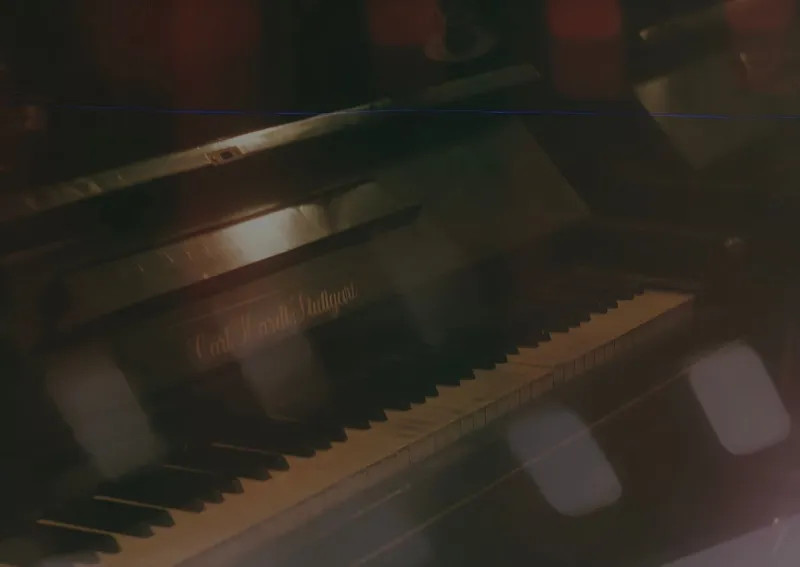
Let's set the scene. A character is standing in the rain, or staring out a window, or holding an object that belonged to someone who is now dead. They haven't said anything meaningful in forty minutes. The screenplay has done them no favors. The director is running out of time and ideas. And then — plink — a single, lonely piano note falls from the sky like a tear from God himself, and suddenly you're crying into your popcorn bucket wondering what happened.
What happened is that you got played. Again.
The Sad Piano Chord is Hollywood's most reliable emotional support animal. It doesn't require feeding, it never bites, and it will absolutely make you feel something whether the movie deserves it or not. It is the musical equivalent of someone walking up to you, pressing gently on your sternum, and whispering, "This is the part where you feel sad now." And the truly humiliating part? It works. Every single time. On all of us. Including the people who are currently writing articles about it.
A Brief History of Emotional Outsourcing
Film scores have been manipulating audiences since the silent era, when live pianists in movie theaters were essentially doing the same job — telling you what to feel because the images alone weren't getting there fast enough. The difference is that back then, everyone understood the transaction. The pianist was a visible participant. There was no pretense.
Somewhere in the last thirty years, minimalist piano became something different. It stopped being accompaniment and started being a replacement. A single sustained note — or worse, a slow, deliberate sequence of three to five notes that resolves into nothing — became the universal signal that a scene is Emotionally Significant, regardless of whether the writing, acting, or direction has done anything to earn that significance.
The formula is simple: underdeveloped character + unearned dramatic moment + sad piano = audience weeping = critical praise = awards conversation. Rinse. Repeat. Collect.
The Anatomy of the Crime
Here's how it typically goes down. Act three arrives. A character who has been given approximately one personality trait — let's say they love their daughter, or they used to play baseball, or they once had a dog — is now confronted with a loss that the movie has technically set up but emotionally neglected. We don't really know this person. We've watched them for ninety minutes and could not tell you their middle name, their fears, or a single opinion they hold about anything.
The director knows this. The editor knows this. Somewhere in a glass building in Burbank, everyone knows this.
And so the piano arrives. Not a full orchestral swell — that would be too obvious, too manipulative in a way audiences have learned to resist. No, this is tasteful manipulation. Restrained manipulation. The kind of manipulation that gets described in reviews as "hauntingly understated" and "emotionally precise." One note. Maybe two. A minor key suggestion. Silence. Then another note.
Your lower lip is already doing the thing.
The Offenders (You Know Who You Are)
This publication is not in the business of naming individual films in a way that gets us sued, but we will say this: if you have watched any prestige drama in the last fifteen years that received an Oscar nomination in any category, you have heard this chord. You have heard it in films about grief, about war, about complicated father-son relationships, about women discovering their inner strength in picturesque European locations.
You have heard it in biopics during the scene where the famous person looks at a photograph of themselves from before everything went wrong. You have heard it in superhero movies during the ten-minute window when the studio remembered they were supposed to have emotional depth. You have heard it in animated films aimed at children, which is frankly the most aggressive deployment because children have not yet developed the psychological defenses to recognize what is being done to them.
The composers know. Some of them have spoken, carefully, in interviews about the pressure to "support the emotion of the scene." That phrase — support the emotion — is doing a lot of work. It is a polite way of saying: the emotion is not currently present in the scene, and your job is to bring some.
Why We Let It Happen
Here's the part that requires some honest self-reflection, and we apologize in advance.
We let it happen because it feels good. The sad piano chord doesn't just signal emotion — it creates a physiological response. Minor keys, sustained notes, and slow tempos genuinely affect the human nervous system in measurable ways. This is not a character flaw. This is biology. Hollywood didn't invent the emotional response; they just figured out how to trigger it with minimal investment and maximum efficiency.
The problem isn't that the music moves us. The problem is that we've agreed, collectively and without discussion, to credit the film for the emotional experience rather than the sound design. We walk out of the theater saying "that movie really got me" when what we mean is "a piano made a noise and my body responded appropriately to minor-key stimuli." These are different things.
The movie didn't get you. Hans Zimmer's laptop got you. Or some variation thereof.
A Recovery Program, of Sorts
If you're reading this site, you're probably already in some stage of recovery from the more aggressive forms of cinematic manipulation. You've survived award seasons. You've made it through prestige television. You are, in some meaningful sense, a survivor.
So here is the exercise: next time a single piano note drops in a film, pause — mentally, not literally, because pausing in a theater is rude — and ask yourself what the movie has actually shown you about this character that justifies the emotional response you're currently having. Not what the music is telling you to feel. What the film has demonstrated.
If the answer is "not much," congratulations. You have identified the scam. You may still cry. That's fine. Crying is fine. But cry with your eyes open.
The sad piano chord isn't going anywhere. It's too useful, too effective, and too deeply embedded in the grammar of modern film to be dislodged by one snarky article on a website with the word "phobe" in the URL. But awareness is its own reward. The next time those three little notes descend and your chest tightens, you'll know exactly what's happening.
And you'll probably feel it anyway. We all do.
That's the worst part.