Congratulations, Your Haunted House Now Has Subtext: The Prestige Horror Industrial Complex
There is a moment, usually around the forty-minute mark of any prestige horror film released in the last decade, where you realize you are not watching a scary movie. You are watching a director's letter of recommendation for themselves, written in the blood of a genre they discovered three years ago and now fully believe they invented.
Welcome to elevated horror. Please wipe your feet. The cinematographer won a BAFTA.
The Origin Story Nobody Asked For
It started innocuously enough. A few genuinely talented filmmakers — you know who they are, and yes, their movies were good, calm down — made thoughtful, atmospheric horror films that happened to also be terrifying. Critics lost their minds. The phrase "elevated horror" was coined, presumably in a Brooklyn apartment over natural wine, and from that moment forward, every director who had ever made a quiet drama about grief decided that what the genre really needed was them.
The pipeline is now fully operational. Win a Spirit Award. Get a Netflix deal. Make a movie where a Victorian dollhouse represents the inherited trauma of late-stage capitalism. Watch A24 put it on a poster with nothing but your last name and a shadow.
Congratulations. You have elevated horror.
What "Elevated" Actually Means in Practice
Let's be specific about what the elevation process involves, because it is a remarkably consistent formula.
First, you slow everything down. Not because slowness is inherently meaningful, but because fast editing is what the other horror movies do, and you are not like other horror movies. Your movie takes eleven minutes to establish that a door is slightly ajar. The audience shifts in their seats. A critic in the third row nods solemnly and writes "Tarkovsky" in their notebook.
Second, you hire an actor who has previously been nominated for something. Not necessarily won — nominated is fine. The nomination does important work here. It signals to the audience that what they are watching is acting, not screaming. When your lead stares at a mirror for four unbroken minutes, we understand that she is not just seeing a ghost. She is reckoning with the ghost of her mother's expectations. This is different from regular ghosts. Regular ghosts are in lesser films.
Third, and this is crucial, you make sure the monster is a metaphor. Not a fun metaphor, not a metaphor that enhances the scares — a metaphor that replaces them. The creature represents addiction, or grief, or the housing market, or the way American masculinity fails to process emotional vulnerability. The creature may or may not actually appear on screen. Its absence is the point. You're welcome.
The Critic Participation Trophy
None of this would work without the full cooperation of film criticism, which has responded to prestige horror with the enthusiasm of someone who just discovered a band they can finally tell people about at parties.
Every prestige horror release now arrives pre-loaded with think pieces about what it means. Not whether it is scary — that question has been quietly retired, like an aging character actor — but what it means. Does it mean something about grief? It means something about grief. Does it mean something about America? It means something about America. Does the possessed ceramic owl in the third act represent the commodification of folk art traditions in post-industrial rural communities? One guy on Letterboxd absolutely thinks so, and he has been right about things before.
The result is a critical ecosystem where admitting you were not scared by a prestige horror film is treated as a personal failing. You weren't scared because you weren't paying attention. You weren't scared because you haven't processed your own relationship with inherited domestic trauma. You weren't scared because, frankly, you went to a state school.
The Jump Scare Rehabilitation Program
Here is the dirty secret that nobody in the elevated horror conversation wants to acknowledge: the jump scare, that most derided of cinematic tools, still works. It works every single time. Your body does not care about your Letterboxd rating. Your nervous system is not impressed by the director's previous feature, which played in competition at Cannes.
Prestige horror knows this. It has not eliminated the jump scare. It has simply dressed the jump scare in a linen blazer and given it a tragic backstory. The loud noise still happens. The sudden cut still happens. But now it happens after six minutes of a woman breathing in a farmhouse kitchen, and the thing that jumps is not a cat or a villain — it is a memory, rendered in slow motion with a score that sounds like a string quartet falling down stairs.
This is the same jump scare. It has been elevated. Please update your records.
The Haunted House With Better Lighting
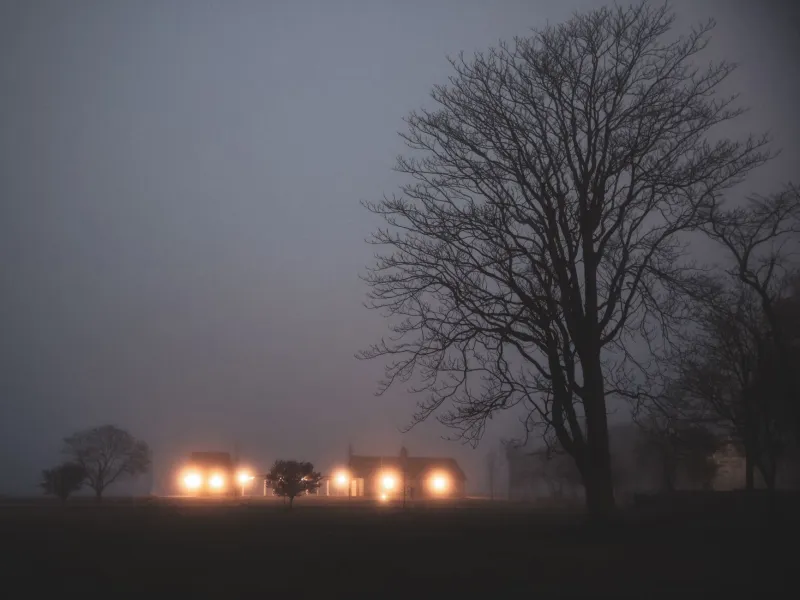
Strip away the cinematography — and it is always beautiful, nobody is disputing the cinematography — and what most prestige horror films are offering is structurally identical to the B-movie haunted house pictures they are implicitly positioning themselves against. Isolated location. Family or couple under stress. Supernatural intrusion that externalizes an internal conflict. Third-act confrontation. Ambiguous ending that the director will explain in interviews for the next two years.
The difference, and this is the entire difference, is that the B-movie knew what it was. It did not need you to write a paper about it. It was happy to scare you and send you home. Prestige horror needs you to understand that it is better than that, even while doing exactly that, which is a psychological maneuver so audacious it almost deserves the awards attention it relentlessly pursues.
A Modest Proposal for the Genre's Future
Here is what Cinephobe recommends, free of charge, to the prestige horror industrial complex: make one scary thing happen in the first thirty minutes. Just one. A door, a sound, a face — anything that reminds the audience they are watching a horror film and not a Sundance drama that accidentally wandered onto the wrong screen.
You can keep the metaphors. Keep the beautiful cinematography. Keep the actor who was in that thing about the fishing village. Keep all of it. Just also make the movie occasionally frightening, which is, historically speaking, the job.
Or don't. Keep making haunted houses with better lighting and calling it transcendence. The critics will follow. The awards will follow. The think pieces will follow.
The rest of us will be at home watching a movie where a shark attacks a helicopter, completely unbothered, completely unelated, and having an absolutely tremendous time.