Pretty Lights, Empty Room: When Cinematography Showed Up and the Story Didn't
Let's get something out of the way immediately. Nobody here is anti-beauty. We like beautiful things. A sunset is beautiful. A well-constructed sandwich is beautiful. We are not monsters.
But there is a specific kind of beautiful that has been slowly colonizing awards season for the better part of two decades, and it goes something like this: a cinematographer lights a barn door in rural wherever so exquisitely that film critics lose the ability to form complete sentences, and by February that barn door is somehow accepting a Best Picture trophy while the audience sits in the parking lot trying to remember if anything happened in the movie.
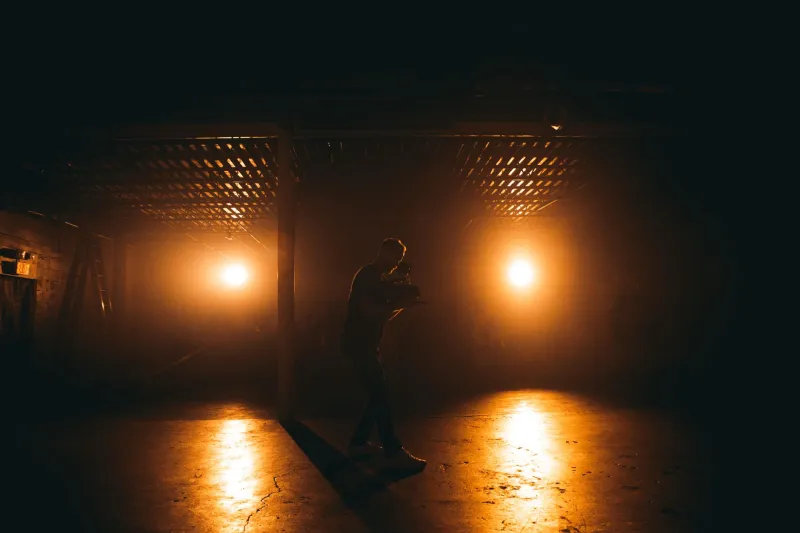
Something happened. Probably. There was a woman. She was sad. There was fog. The fog was also sad. Someone looked out a window. The window was breathtaking.
The Lamp That Launched a Thousand Think Pieces
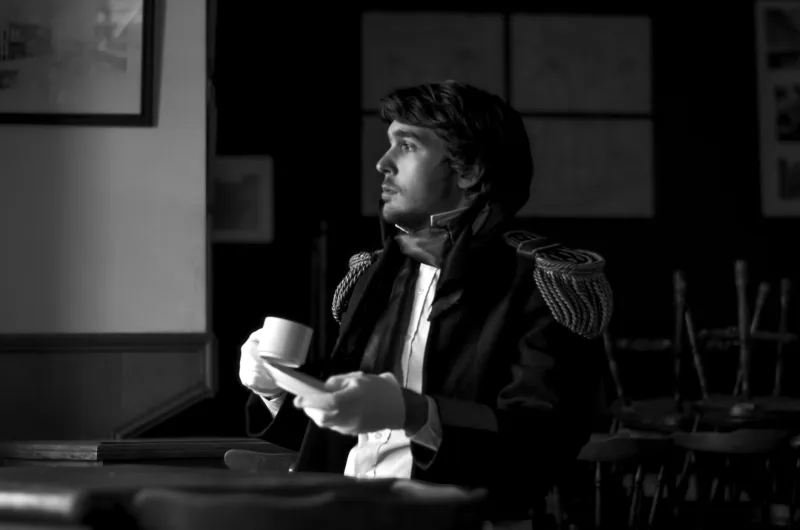
You know the shot. Every prestige film has one. A single practical light source — a candle, a bare bulb, an inexplicably placed antique lamp — illuminates one half of a character's face while the other half dissolves into shadow. The cinematographer has clearly been thinking about Caravaggio since the third grade. The director of photography deserves every award they will receive.
The character, however, is thinking about nothing in particular. Or possibly everything. The film is not going to tell you which. That ambiguity, the press notes will later explain, is the point.
This is the Sad Lamp Problem. The craft is immaculate. The intention is artistic. The experience of watching it is roughly equivalent to staring at a very expensive screensaver for two hours and twelve minutes.
And yet somehow, come awards season, the conversation shifts entirely to how the film looks, as if the question of what it means — or whether it means anything at all — is a rude thing to bring up at dinner.
What We Talk About When We Talk About Visuals
Here's what the cinematography-as-substance argument actually sounds like in the wild: "You just have to feel it." "It's more of an experience than a story." "Roger Deakins literally invented light."
All of these statements may be true. Roger Deakins has, in fact, done things with a camera that should not be physically possible. The problem is that feeling something and understanding something are not the same activity, and awards were theoretically designed to honor the latter as much as the former.
When a movie wins Best Picture because it is gorgeous, we have quietly agreed as a culture that the pictures are more important than the picture. That is a strange thing to have agreed to. We did it without a vote.
Production design gets folded into this same racket. A film set in 1920s Vienna will arrive with wallpaper so historically accurate it makes architectural historians weep, costumes sourced from actual estate sales, and a plot that amounts to a man being vaguely disappointed for ninety minutes. Critics will call it "ravishing." They are not wrong. They are also not asking the obvious follow-up question, which is: ravishing in service of what, exactly?
The Unspoken Deal
Somewhere along the line, a deal got struck between film culture and the viewing public. The deal goes like this: if a movie is sufficiently beautiful, you are not allowed to complain that it is boring. Complaining means you don't get it. Not getting it means you are the kind of person who liked the superhero movie instead, and nobody at this dinner party wants to be that person.
So we sit with the fog and the lamp and the woman at the window, and we nod slowly, and we say "visually arresting" to whoever is standing next to us at the reception, and we go home and watch something with a plot and feel vaguely guilty about enjoying it.
This is the real achievement of prestige cinematography: it has made narrative feel slightly embarrassing.
In Defense of Things Happening
Here is a radical position: a story should probably have a story in it.
This does not mean explosions. It does not mean a twist ending or a car chase or a scene where someone learns a lesson and hugs their estranged father. It means that when the credits roll, the audience should be able to construct a sentence — one sentence, any sentence — that describes what the film was about beyond its visual grammar.
"It was about grief" counts. "It was about the passage of time" counts, barely. "It was about the way light falls on a woman's face in a way that evokes longing" is a description of cinematography, not a story, and we should stop accepting it as equivalent.
The frustrating part is that this is not actually an either/or situation. Films can be visually extraordinary and narratively coherent. This has been proven repeatedly. "Parasite" looked incredible and also had a plot with corners and edges you could grab onto. "Mad Max: Fury Road" was essentially a two-hour moving painting that also contained, at minimum, one clear objective. Even "No Country for Old Men," which famously ends by refusing to end, at least had the decency to give you something to argue about on the drive home.
The issue is not that beautiful films exist. The issue is that beautiful films about nothing have learned to disguise themselves as beautiful films about everything, and awards season has become the annual ceremony where we pretend we can't tell the difference.
The Acceptance Speech You'll Never Hear
Imagine, just for a moment, a cinematographer walking to the podium and saying the following: "Thank you so much for this honor. The director and I worked incredibly hard to make this film look extraordinary, and I think we succeeded. The script, however, was forty-three pages and mostly stage directions describing fog. We did our best."
That speech will never happen. Instead, the director will thank their "collaborators" and talk about "the light of that particular region" and the "emotional truth they were chasing," and everyone will applaud, and the movie will be available on a streaming service by March where it will sit, unwatched, in approximately eleven million queues next to a documentary about penguins that everyone also intends to get to.
The lamp will look beautiful in the thumbnail.
Something will have happened in the movie. Probably. There was fog.