I Called the Twist Before the Opening Credits and Still Sat There for 158 Minutes: Confessions of a Plot-Spoiled Viewer
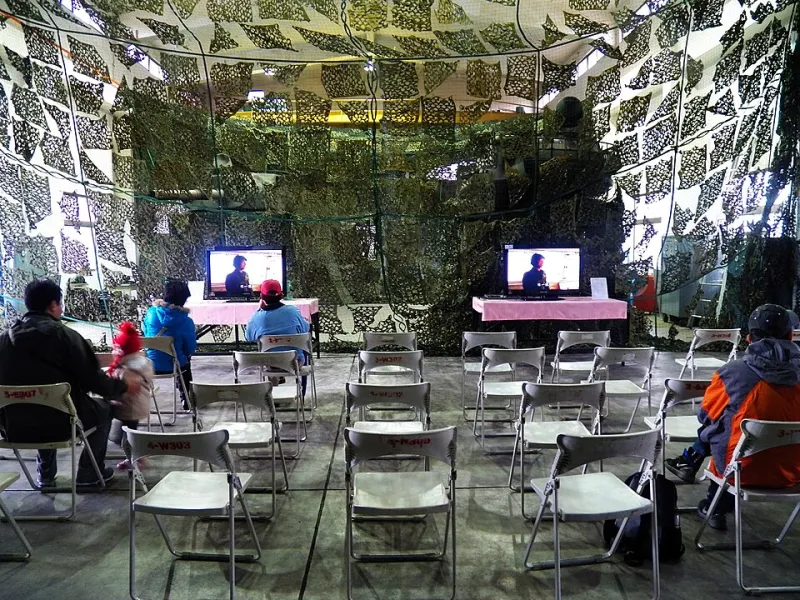
Photo: 玄史生, CC0, via Wikimedia Commons
Hi. My name is — well, it doesn't matter, we're all anonymous here — and I predicted the ending of a major studio thriller before the title card appeared.
The trailer showed a detective with a dead wife, a drinking problem, and a new partner who was, and I quote the trailer itself, "too good at his job." I turned to my date and said, "the partner did it." She said I was being cynical. Two hours and thirty-eight minutes later, the partner did it. She did not apologize. Neither did the movie.
This is my story. Statistically, it's also yours.
The Twelve-Minute Problem
Here's the thing about modern studio plotting: it's not that you're a genius. It's that the movies are written by committee, workshopped by focus group, and sanded down until every edge that might surprise someone has been removed. The twist doesn't surprise you because you've seen a thousand movies. The twist fails to surprise you because the movie told you, repeatedly, in the language of cinematic convention, exactly what it was going to do.
The quiet neighbor with the tragic backstory? They're involved. The flashback that shows someone dying but conveniently crops out the face? That person is alive. The lead character who "has nothing left to lose"? They have approximately 90 minutes left to lose it in, plus a sequel hook.
And here's the truly demoralizing part: knowing doesn't help. You can't leave — you paid $22 for the ticket, the parking garage doesn't prorate, and your date is emotionally invested. So you sit there, watching the movie amble toward the ending you already booked, like a GPS recalculating to a destination you've already arrived at.
We Should Have Left in Minute Twelve. We Stayed for 146 More.
Let's hold a moment of silence for the sunk cost fallacy, the only force in cinema stronger than a Hans Zimmer brass swell.
Nobody walks out of a movie anymore, and it's not because the movies got better. It's because we've all internalized the accounting. You don't leave a Broadway show at intermission. You don't leave a buffet after one plate. And you certainly don't leave a movie you've already spoiled for yourself, because then you'd have to admit, out loud, in the lobby, that you spent real money to watch a plot you'd already solved.
So we stay. We sit through the third act we wrote in our heads during the trailers, checking our predictions against the film like a teacher grading a lazy student's exam. "Oh, the buried evidence is in the boat. Groundbreaking. Next you'll tell me the partner has a burner phone." The partner had a burner phone. I got no satisfaction from being right. Being right about a movie is like winning a staring contest against a poster.
In Defense of Being Wrong
Now, a confession from the podium: the best movie experiences of my past five years all involved being wrong.
I did not see Knives Out's central pivot coming, and the physical sensation of that surprise — genuine, unmanufactured, un-teased in the trailer — was worth more than any 158-minute thriller I've correctly diagnosed. I won't spoil what I didn't see coming in Parasite, but I will say that the moment my prediction file was incinerated remains the single most alive I've felt in a theater this decade, excluding the fire alarm at an AMC in 2019.
This is what predictable blockbusters steal from us: not time, exactly, but the possibility of delight. A movie that respects your intelligence doesn't just avoid insulting it — it actively gambles that you're paying attention, then rewards you for it. A movie that doesn't respect your intelligence hands you the answer in the second scene and then spends two hours pretending it didn't, hoping you have the memory of a golden retriever at a lake.
The Cinephobe Support Group Meets Thursdays
So here's the recovery program, for those of us spoiled-silly by a decade of focus-grouped storytelling:
Step one: Stop watching trailers. All of them. Cold turkey. The trailer is the movie pitching itself to you instead of the movie.
Step two: When you predict a twist — and you will — do not announce it. Write it down, seal it, and see if the movie earns your surprise. If it doesn't, you have a documented grievance and a fun note to read bitterly on the drive home.
Step three: Reclaim the walkout. One per year, minimum. If minute twelve told you everything, minute thirteen owes you nothing.
Step four: Champion the movies that got you. Tell people when a film surprised you — not with a twist, necessarily, but with a choice. Surprises don't have to be plot-shaped. Sometimes the surprise is simply that a $200 million production contained one honest idea.
Meeting's over. Go home. Don't watch the trailer on the way out. You already know how this ends.