You Ran Up Some Stairs and Now You're Supposed to Be a Different Person
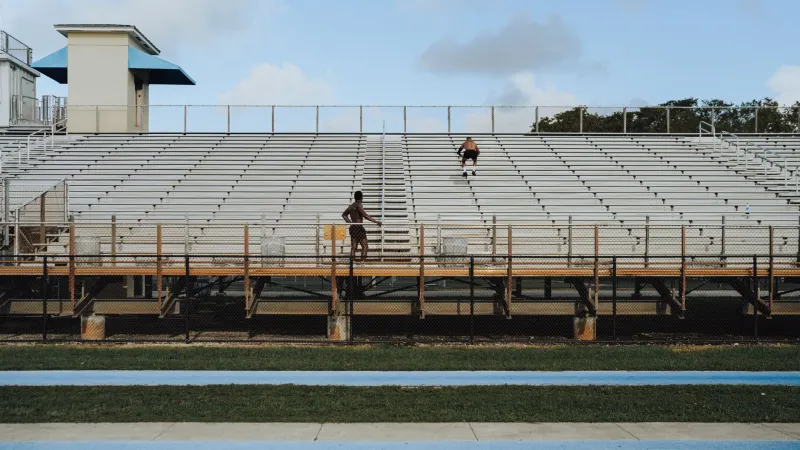
Somewhere around the third decade of watching movie characters punch frozen meat, sprint through rain, and do pull-ups in slow motion while a synthesizer swells, it is worth asking a simple question: did any of that actually change them?
The answer, almost universally, is no. But the music was very convincing, and the editor cut away before you could notice.
Welcome to the montage industrial complex — cinema's most beloved cheat code, and the single greatest obstacle standing between mainstream audiences and actual storytelling.
What a Montage Actually Is (Versus What You're Told It Is)
In film school, they'll tell you the montage is a sophisticated narrative device. A way to compress time. A visual shorthand that respects the audience's intelligence by not making them sit through every repetitive beat of a training sequence or a career rise or a romantic courtship.
That is the generous interpretation.
The less generous — and significantly more accurate — interpretation is that the montage exists because writing genuine character development is hard, and editors have access to licensed music. If your protagonist needs to go from broken and defeated to ready-for-the-final-act in under three minutes, you don't need a screenwriter. You need a needle drop and someone who knows how to cut on the beat.
The montage doesn't show transformation. It implies it. And implication is doing a lot of heavy lifting in American cinema right now.
Rocky Did This to Us and We Let Him
Let's be honest about where the modern training montage was codified into law. Rocky is a genuinely good film. Sylvester Stallone wrote something real about ambition and dignity and the particular loneliness of being underestimated. The training sequence in that movie works because the film earns it — you understand who Rocky is before he starts running, so watching him run means something.
Then the sequels happened. Then every other movie happened. And somewhere in the process, Hollywood extracted the training sequence from its context and started applying it universally, like a template, like a fix, like a band-aid over a script that hadn't figured out how its protagonist was actually supposed to grow as a human being.
By the time we hit the 1980s, the montage wasn't a storytelling tool anymore. It was a genre unto itself. An entire generation of films were structured around the question: how quickly can we get to the part where someone gets good at something while a song plays?
The answer was: immediately. Always immediately.
The Specific Lies the Montage Tells
Let's catalog them, because they are numerous and they are specific.
The Competence Lie. Your character couldn't do the thing at the start of the montage. They can do the thing at the end. The montage has replaced the actual question of how — the failures, the adjustments, the particular humiliations of learning — with a sequence of improving snapshots. You see someone fall off a horse four times in quick succession, and then you see them galloping confidently, and your brain fills in the gap. The movie didn't show you growth. It showed you a before and an after and trusted your imagination to invent the middle.
The Emotional Resolution Lie. This is the more insidious one. Training montages are bad enough, but the emotional montage — where a character processes grief, or rebuilds confidence, or falls in love — is where the form becomes genuinely dishonest. Someone wanders through a city alone. They stare at old photographs. They throw something in the trash. They laugh unexpectedly at something small. The song fades out. They're better now. We never found out why. We never found out how. The movie moved on and expected us to come with it.
The Substitution Lie. This is where montages go from lazy to actively harmful. Some films use the montage not just to compress time but to replace scenes that should exist. There are movies — successful, well-reviewed movies — where a character's entire arc is a montage. Where the thing that was supposed to happen in act two, the actual reckoning with whatever the story set up, has been edited into a three-minute sequence with a good song so the film can get to its ending faster. You didn't watch a character change. You watched a highlights reel of changes that weren't shown to you.
The Music Is the Real Villain Here
Here's the mechanism nobody talks about enough: montages work because of the music, and the music is manipulating you in ways that have nothing to do with the story.
A well-chosen song creates an emotional experience that the visuals then get credit for. Your chest tightens during the training montage not because you've been convinced of this character's growth but because the song is doing something to your nervous system that your brain retroactively assigns to the narrative. The movie didn't earn that feeling. The composer did. The licensing department did.
This is why the same montage formula applied to a character you've known for twenty minutes feels emotionally equivalent to a scene in a film where you've spent two hours with someone. The music levels the playing field in a way that is genuinely unfair to good storytelling. It means a lazy film can manufacture the sensation of depth without doing any of the work that depth requires.
What Gets Lost When the Montage Wins
The cost is specific and it's worth naming. When a montage replaces actual character work, you lose the scenes where the character fails in a way that reveals something true about them. You lose the conversation that changes how they see the problem. You lose the moment of genuine doubt — not the quick-cut-to-sad-face-before-the-music-swells doubt, but the real kind, the kind that lasts longer than four seconds and doesn't resolve cleanly.
You lose the texture of becoming someone different. Because becoming someone different is slow and non-cinematic and doesn't cut well to a song. It's mostly just people sitting with things they don't understand yet, and that's very hard to make visually interesting, and nobody's figured out how to license a song that sounds like unresolved ambivalence.
So instead we get the stairs. We get the slow-motion punching. We get the quick-cut sequence of someone getting incrementally better at whatever the movie decided they needed to get better at, and then we get the triumphant final act, and then we go home having watched a person be active for two hours without ever really watching them think.
A Modest Proposal
The montage doesn't need to die. Used honestly — to compress genuinely repetitive time, to show passage rather than transformation — it's a legitimate tool. The problem is scope creep. The problem is that Hollywood discovered it could use the montage to skip the hard parts, and then kept expanding its definition of what counted as a hard part until the montage was covering entire character arcs.
So here's the ask: the next time a film tries to hand you a training sequence and call it growth, notice the music first. Notice how much of what you're feeling is coming from the song rather than the story. Ask yourself what you actually know about this person that you didn't know three minutes ago.
If the answer is "they're better at the thing now," that's not character development.
That's just activity. And activity, however well-scored, is not the same as a person becoming real.
You ran up some stairs. Congratulations. Now explain to me who you are.