The Movie Was Fine. You Were Fourteen. These Are Not the Same Thing.
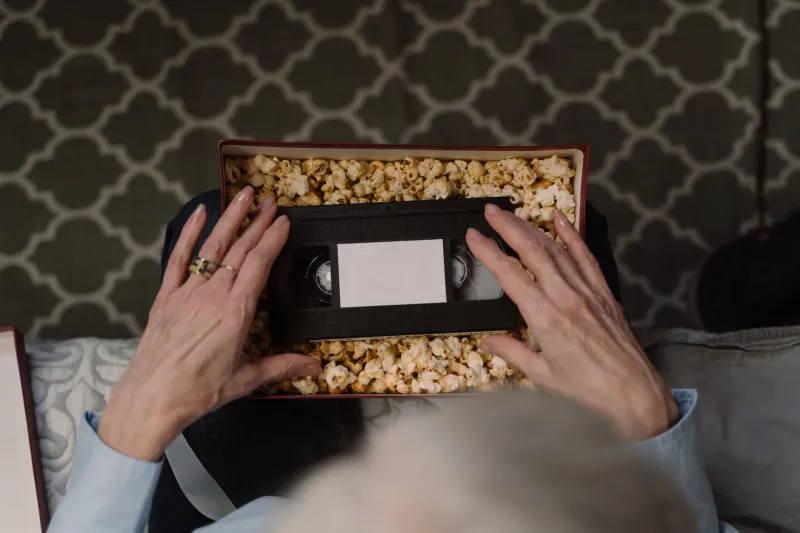
There is a movie you love. You have defended it in conversations you did not need to have. You have described it to people who didn't ask. You have, at some point, rewatched it and felt a warmth so complete and specific that it briefly seemed like evidence of the film's objective quality.
It is not evidence of the film's objective quality. It is evidence of when you first saw it.
This is not an insult. It is a diagnosis, and the first step in any recovery is accurate information about what you're actually dealing with.
How the Brain Turns a Movie Into a Monument
Somewhere between the ages of twelve and eighteen, the human brain is doing an enormous amount of construction work. Identity is being assembled. Emotional vocabulary is being acquired. The nervous system is learning what things feel like and, crucially, cataloguing those feelings against whatever was happening in the room at the time.
If a movie was in the room during a significant stretch of that period — if it played at a sleepover, if you saw it with someone you were in the process of falling for, if it was the first thing that made you feel genuinely understood by a piece of art — then that movie gets filed under something different than film I enjoyed. It gets filed under formative experience, and the brain does not distinguish between the quality of the film and the quality of the feeling it produced.
This is why a movie that is, by any reasonable metric, a competently assembled piece of mid-budget entertainment from the late nineties can feel, to a specific person, like an irreplaceable work of art. The movie didn't make the feeling. The feeling made the movie. You just happened to be watching something when it happened.
The Algorithm Knows What You Were Doing in 1998
Streaming platforms have spent considerable money understanding exactly this phenomenon, and they are not using that knowledge for your benefit.
The recommendation engine is not trying to show you great cinema. It is trying to show you cinema that will make you feel something quickly and reliably so that you keep the subscription active. And nothing produces fast, reliable feelings like the movie you loved at an age when everything felt enormous.
This is why your homepage is full of things you've already seen. Not because the platform ran out of new content — there is always more content — but because new requires effort and familiar requires none. The algorithm has correctly identified that your nostalgia is a renewable resource, and it is farming it with the efficiency of an industrial operation.
Every time you click on something from your formative years, you are training the system to show you more of it. You are, in effect, collaborating in the construction of a streaming experience that gradually replaces the present with a curated version of your past. The platform calls this personalization. A less generous term would also be accurate.
A Framework for Figuring Out What You Actually Think
The good news is that the nostalgia bias is detectable, and detecting it doesn't require you to stop loving the movie. It just requires honesty about what you're loving.
Test one: The Stranger Test. Describe the film to someone who has never seen it and has no emotional connection to it. Watch their face. If their expression suggests they are waiting for the part where it gets good, you have some information. If they seem genuinely engaged by the premise and execution, you have different information.
Test two: The First Time Test. Ask yourself honestly: if you saw this movie for the first time today, as the person you currently are, would it do anything to you? Not would you appreciate it in the context of its era, not would you respect its cultural significance — would it actually move you? There's no shame in the answer being no. That's not a failure of the movie or of you. It's just chronology.
Test three: The Specific Defense Test. When you defend this movie, what are you actually defending? If your arguments are primarily about how it made you feel rather than what it did, you are defending an experience, not a film. Experiences are worth defending. Just label them correctly.
Test four: The New Movie Comparison Test. This one is uncomfortable. Find a film released in the last few years that covers similar territory, has similar ambitions, and received similar reviews to the one you love. Watch it. If you find yourself cataloguing its flaws with an energy you never applied to your beloved older film, the bias is operating. The new movie didn't earn your scrutiny. The old one just got a pass.
The Rewatch Problem
Rewatching is where nostalgia bias gets particularly treacherous, because the rewatch almost never produces what you went in looking for.
What you're looking for is the original feeling — that specific, unrepeatable experience of being a particular age in a particular room with a particular emotional state. The movie cannot give you that. The movie can only give you itself, which is a fixed object that hasn't changed, being watched by a person who has changed considerably.
So one of two things happens. Either the rewatch confirms the feeling, which feels like validation but is actually just the memory of the feeling being stronger than the experience of the film. Or the rewatch is slightly disappointing, which you then explain away as I wasn't in the right mood or it needs a better TV, when the actual explanation is that you were trying to use a movie as a time machine and movies are not time machines.
Neither outcome tells you much about the film's quality. Both outcomes tell you a great deal about the human brain's extraordinary capacity for attachment.
What Genuine Quality Actually Looks Like
None of this means your favorite movie is bad. Some of those formative-era films are, in fact, good. Some of them are great. The nostalgia bias doesn't preclude quality — it just makes quality impossible to verify from the inside.
Genuine quality tends to be visible from outside the emotional investment. It shows up in structural decisions that hold together under analysis. It appears in performances that still register as specific and true when you're not already primed to love them. It survives the Stranger Test and the First Time Test and the New Movie Comparison Test without special pleading.
If your movie passes those, congratulations. You love something good and you have the receipts.
If it doesn't, that's fine too. You're allowed to love things that are merely yours — things that belong to a specific time and a specific version of yourself rather than to the general category of quality cinema.
Just stop arguing about it on the internet.
The algorithm will keep feeding you more of it either way.